
A slip on the pavement, a collision during a football match, or a simple misstep at home—accidents happen in the blink of an eye. When an accident involves your mouth, the physical pain is often compounded by sheer panic. Seeing a broken tooth or bleeding gums can be terrifying, leaving you wondering if your smile will ever be the same again.
Dental trauma is a high-stress event that requires calm, expert intervention. Time is often the most critical factor in saving a tooth, but fear of the dentist can make a bad situation worse.
At Nitrodentists in Khar, we specialize in turning these frantic moments into controlled, comfortable experiences. We provide expert dental trauma care that prioritizes not just the repair of your teeth, but your emotional well-being too. Using advanced pain management and nitrous oxide sedation (laughing gas), we ensure that treating your injury doesn’t have to be another traumatic event.
What is Dental Trauma?
Dental trauma refers to any injury to the teeth, gums, lips, or the bone that holds the tooth sockets. It is surprisingly common and affects people of all ages, from toddlers learning to walk to adults playing weekend sports.
Injuries can range from minor chips to severe fractures or teeth being completely knocked out. Regardless of the severity, the impact on your oral health can be lasting if not treated immediately. The nerves inside a tooth are delicate; trauma can cut off their blood supply, leading to infection, discoloration, or tooth loss weeks or even months after the accident.
Common Trauma Scenarios We Treat
Our clinic in Khar is equipped to handle the full spectrum of dental injuries. Here are some of the most common cases we see and treat:
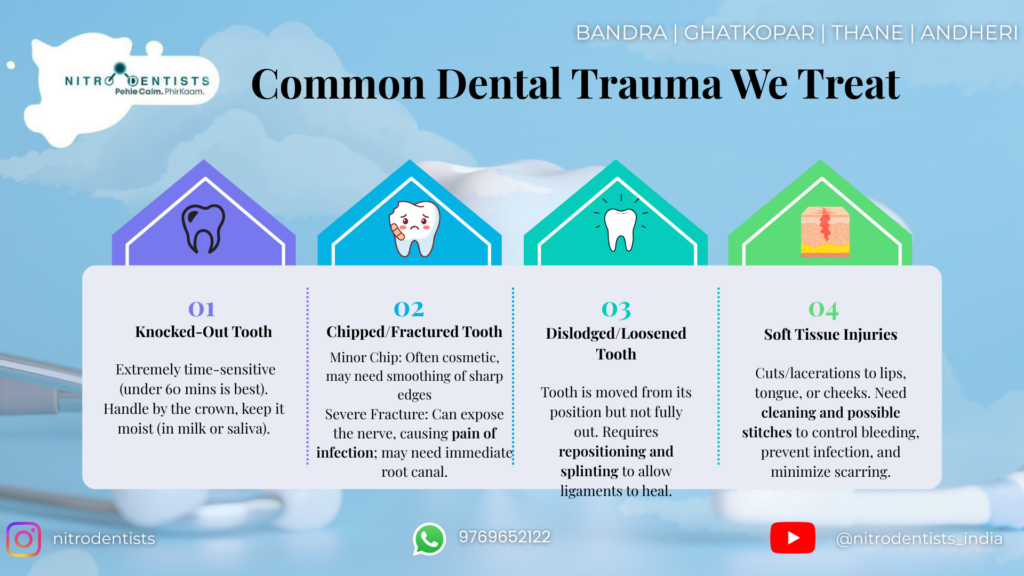
1. Knocked-Out Teeth (Avulsion)
This is the most time-sensitive dental emergency. If a permanent tooth is knocked completely out of its socket, there is a small window of opportunity—usually less than 60 minutes—to re-implant it successfully. The ligaments on the root must remain alive for the tooth to reattach to the bone.
2. Chipped or Fractured Teeth
A blow to the face can cause a tooth to crack or a piece to break off.
- Minor Chips: These are mostly cosmetic but can leave sharp edges that cut the tongue or cheek.
- Severe Fractures: If a crack extends deep into the tooth, it can expose the sensitive pulp (nerve) to bacteria. This causes intense pain and requires immediate covering or root canal treatment to save the tooth.
3. Dislodged or Loosened Teeth (Luxation)
Sometimes a tooth isn’t knocked out but is pushed sideways, deeper into the socket, or pulled partially out. This is called luxation. We gently reposition the tooth and stabilize it with a splint (similar to braces) to allow the supporting ligaments to heal.
4. Soft Tissue Injuries
Trauma often involves cuts, punctures, or lacerations to the lips, tongue, or cheeks. These areas bleed heavily and may require stitches. We carefully clean and repair these tissues to minimize scarring and ensure proper healing.
The Nitrodentists Difference: Calm in the Chaos
When you rush into a dental clinic with an injury, your adrenaline is spiking. The last thing you want is a painful injection or a stressful procedure. This is where Nitrodentists stands apart. We focus on “Trauma Care Without the Trauma.”
Immediate Anxiety Relief with Nitrous Oxide
We are one of the few clinics in Khar specializing in sedation dentistry for emergency cases. If you or your child are panicked, we can administer nitrous oxide (laughing gas).
- How it helps: You breathe the gas through a comfortable mask. Almost instantly, your anxiety drops. You feel detached from the stress and pain of the injury. You remain awake and can follow instructions, but the fear is gone. This is crucial for trauma cases, as it allows our dentists to work quickly and precisely without you flinching or fighting the treatment.
Pain-Free Restoration
We believe you have suffered enough pain from the accident itself. The treatment should not add to it. We use advanced local anesthetics to completely numb the injured area. Combined with sedation, this ensures a truly pain-free experience while we repair your smile.
Immediate Steps: What to Do Before You Arrive
The actions you take in the first few minutes after an injury can determine the outcome. Follow these steps immediately:
- Stay Calm: Panic increases bleeding and makes decision-making difficult.
- Handle the Tooth Carefully: If a tooth is knocked out, pick it up by the crown (the white chewing part), never by the root.
- Keep it Clean: If the tooth is dirty, rinse it gently with milk or water. Do not scrub it or remove any attached tissue fragments.
- Keep it Moist: This is vital. If possible, place the tooth back in the socket and bite down gently on a handkerchief to hold it in place. If that’s not possible, carry it in a container of milk or hold it inside your cheek (be careful not to swallow it). Do not keep it in water, as this can damage the root cells.
- Control Bleeding: Apply gentle pressure to bleeding areas with a clean gauze or cloth.
- Come to Nitrodentists Immediately: Call us on your way so we can prepare for your arrival.
Frequently Asked Questions (FAQ)
Q: Can a knocked-out baby tooth be put back in?
A: No. We generally do not re-implant primary (baby) teeth because doing so can damage the permanent tooth developing underneath. However, you should still visit us immediately to ensure no fragments remain and to check for damage to the jaw or surrounding teeth.
Q: How do I know if my jaw is broken?
A: Signs of a broken jaw include inability to bring your teeth together properly (your bite feels “off”), inability to open your mouth, severe pain, swelling, or numbness in the chin or lip. This is a severe medical emergency.
Q: Is dental trauma treatment expensive?
A: The cost varies depending on the extent of the damage. A simple bonding for a chip is relatively inexpensive, while re-implanting a tooth or performing a root canal is more complex. We provide a transparent cost assessment before we begin, but our primary focus is always saving the tooth first.
Q: How long does recovery take?
A: Soft tissue cuts in the mouth heal remarkably fast, often within a few days. If a tooth has been stabilized with a splint, you may need to wear it for 2 to 4 weeks. We will provide detailed aftercare instructions, including a soft food diet, to ensure proper healing.
Q: Will the repaired tooth look natural?
A: Yes. Modern dental materials are excellent. For chips and fractures, we use tooth-colored composite resins or porcelain restorations that match your natural tooth shade perfectly. You won’t be able to tell where the break was.
Don’t Let an Accident Define Your Smile
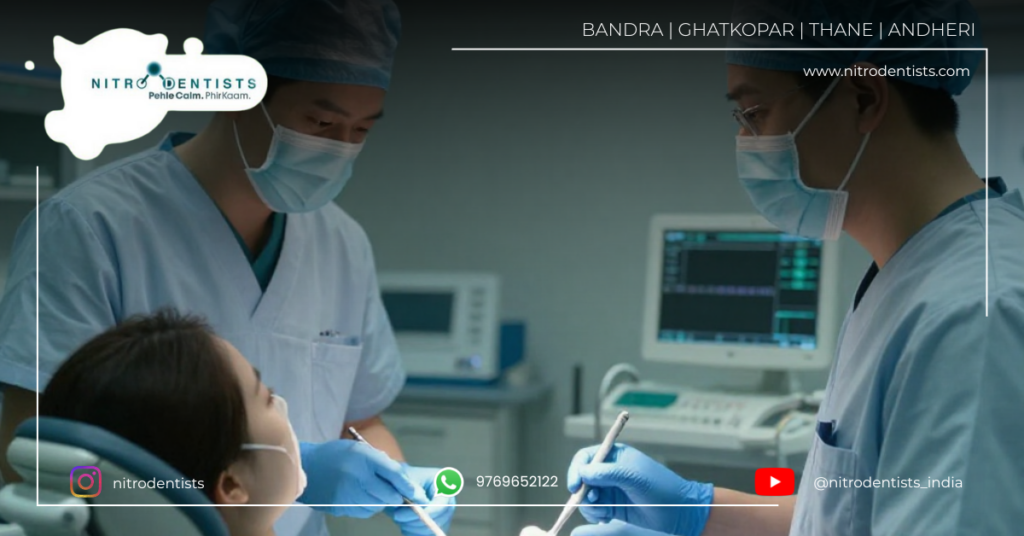
accidents are unpredictable, but your recovery doesn’t have to be. If you experience dental trauma in Khar, you need a team that combines surgical precision with genuine compassion. At Nitrodentists, we are ready to help you navigate the crisis, relieve your pain, and restore your smile—all while keeping you calm and comfortable.
Injured your tooth? Act fast.
Contact Nitrodentists immediately or visit our clinic in Khar for urgent dental trauma care.